There is nothing quite like the energy of harvest season. It’s the time when all your hard work finally pays off.
But it is also the most stressful time for your machinery. Your tractor is about to pull long shifts in dusty, demanding conditions. The last thing you want is a breakdown when the weather is perfect and the crop is ready.
A little bit of preparation goes a long way. Taking the time to go through a proper tractor maintenance checklist before the season begins can help you avoid breakdowns in this peak time of need.
Why a Tractor Maintenance Checklist is Important Before Harvest
Prevent Breakdowns During Peak Season
Breakdowns during harvest are more than just an annoyance; they’re expensive. When you’re racing against an incoming storm or a tight market window, every hour spent waiting for a spare part is money flying out of your pocket.
A pre-harvest check helps you catch that worn belt or cracked hose before it snaps in the middle of a field.
Improve Tractor Performance & Fuel Efficiency
When your filters are clean and your injectors are clear, your engine doesn't have to struggle. This leads to better fuel efficiency, which is a huge deal when diesel prices are fluctuating.
You’ll find that a tractor in top shape handles loads more easily and keeps your PTO speed consistent, making the whole harvest smoother.
Reduce Repair Costs with Preventive Maintenance
Small problems often turn into big, expensive disasters. A $50 seal is an affordable fix today, but if you ignore it and let the transmission run dry, you’re looking at a bill that could take a massive bite out of your harvest profits.
Using a tractor preventive maintenance checklist helps you keep your overhead low by catching issues while they’re still small and manageable.
Pre-Harvest Tractor Maintenance Checklist
Visual Inspection for Leaks, Bolts & Damage
Start with the basics. Look under the chassis for any fresh spots of oil or coolant. Check the lug nuts on your wheels and the bolts on your hitch, as vibration has a way of loosening things over time. If something looks bent, cracked, or out of place, deal with it now.
Engine Oil, Filters & Fuel System Check
Your engine oil is the lifeline of your tractor. Check the level and the colour; if it looks like black sludge, change it.
Also, a clogged fuel filter can cause your engine to sputter and lose power right when you’re pulling a heavy load. If you’re working in particularly dusty regions, your air filter needs to be pristine to prevent engine wear.
Cooling System & Radiator Cleaning
Check your coolant levels and inspect the hoses for any soft spots or cracks. More importantly, blow out your radiator fins. Chaff, dust, and seeds love to clog up radiators, leading to overheating.
Tractor Preventive Maintenance Checklist for Key Parts
Hydraulic System & Lift Performance
Your hydraulics do most of the heavy lifting.
So, check the fluid levels and look for any fraying in the hydraulic hoses. Test your 3-point hitch and any remote valves to make sure they’re responsive. If the lift feels jerky or slow, you might have air in the system or a clogged suction filter.
Battery, Electricals & Lights Check
Harvest days often turn into harvest nights. You don't want to find out your work lights are dead when the sun goes down.
Check all your lamps, signals, and dashboard indicators. While you’re at it, clean the battery terminals. A bit of corrosion can prevent the battery from charging properly, leaving you stranded in the morning.
Brakes, Clutch & Transmission Inspection
Test your brakes to ensure they’re working evenly.
If you have a manual transmission, check the clutch pedal free-play. A slipping clutch during harvest is a recipe for disaster. Listen for any odd growls or whines coming from the transmission, as these are early warning signs of bearing issues.
Tire and Field Readiness Checklist
Tire Pressure & Wear Inspection
Tire pressure affects everything from fuel economy to soil compaction. Check your manual for the correct PSI based on the loads you'll be carrying. Look for "checking" or cracks in the sidewalls and ensure your tread depth is sufficient for the traction you'll need in potentially muddy fields. This is where a 4WD tractor's traction advantage really pays off.
Wheel Alignment & Stability
If your tractor is pulling to one side, your alignment is off. This causes unnecessary tire wear and makes for a very tiring day in the driver's seat. Ensure your wheel weights or ballast are secure and balanced to provide the stability you need for heavy towing.
PTO and Implements Check
The PTO shaft is a powerful and dangerous component. Ensure the safety shields are in place and that the shaft spins freely without vibration. Grease the U-joints on your implements, keeping your tractor attachments well-lubricated is just as important as maintaining the tractor itself.
Tractor Trailer Maintenance Schedule for Harvest Work
Trailer Tires, Brakes & Load Capacity
Check the trailer tires for flat spots or low pressure. If your trailer has its own braking system, test it thoroughly. Overloading a trailer beyond its rated capacity is a shortcut to an accident, so know your limits.
Hitch, Coupling & Safety Check
The connection point between your tractor and trailer is under immense stress. Inspect the drawbar and the hitch pin for excessive wear. Always use a safety chain; it’s a small step that can save lives if a hitch fails on the road.
Lighting & Road Safety Inspection
In international markets where you might be moving equipment between fields on public roads, visibility is vital. Ensure your slow-moving vehicle (SMV) sign is clean and visible. All trailer lights must sync perfectly with your tractor’s signals so other drivers know your intentions.
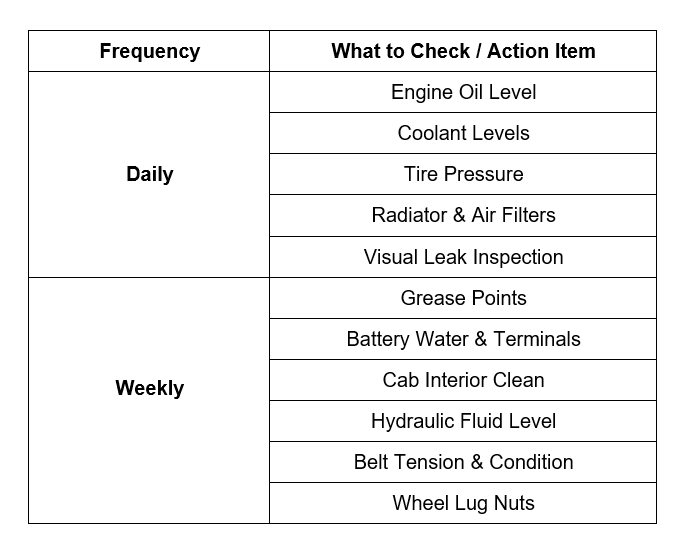
Daily and Weekly Tractor Maintenance Schedule
Maintenance isn't a "once and done" job. During the heat of harvest, you should perform a quick 5-minute "pre-flight" check every single morning.
Why Regular Tractor Servicing Is Important
Routine maintenance safeguards your machinery investment, prevents costly breakdown delays, and ensures peak performance during critical field operations.
-
Extends Machinery Lifespan: Regular oil changes and component checks minimise engine wear, adding years to your tractor's operational life.
-
Prevents Expensive Repairs: Catching minor mechanical faults early stops them from escalating into catastrophic and costly field failures.
-
Boosts Fuel Efficiency: Clean air filters and tuned engines optimise fuel combustion, significantly reducing daily operating costs.
Why Tractors Are Worth The Investment
Investing in a reliable tractor maximises agricultural output, slashes labour dependencies, and serves as the long-term backbone of a profitable farming enterprise.
-
Multiplies Farm Productivity: Advanced horsepower and specialised attachments allow you to complete days of gruelling manual field work in a few hours.
-
Versatile Year-Round Utility: Tractors handle diverse operations beyond tilling, including heavy hauling, landscaping, harvesting, and efficient snow or debris clearance.
-
Long-Term Financial Return: High-quality tractors retain excellent resale value, minimise outsourced labour costs, and consistently boost overall crop yields year after year.
Common Mistakes to Avoid in Tractor Maintenance
Skipping Daily Inspection
It’s tempting to jump in and start the engine the moment you get to the field. Those five minutes spent checking the dipstick could save you five days of downtime.
Ignoring Small Leaks & Noises
A new squeak or a tiny drip of green fluid is your tractor’s way of saying something is wrong. Don't wait for it to exacerbate, and fix the small stuff immediately.
Delaying Filter & Oil Changes
Dirty oil loses its ability to lubricate, and dirty filters starve your engine. Stick to the hours recommended by your manufacturer.
When to Call a Professional Tractor Service
Know your limits. While most of this tractor maintenance checklist can be done with basic tools, some things require a professional.
If you're dealing with complex electronics, fuel injection timing, or internal transmission repairs, reach out to TAFE's after-sales support team. It's better to pay for a professional servicing than to accidentally cause more damage.